Catch heat stress in the shed, not the tank
Dairy cows and finishing cattle feel housing heat and humidity long before the forecast explains lost milk or poor gains. Fix the shed early and protect your yields.
From install to better housing decisions
-
Mount it in the housing
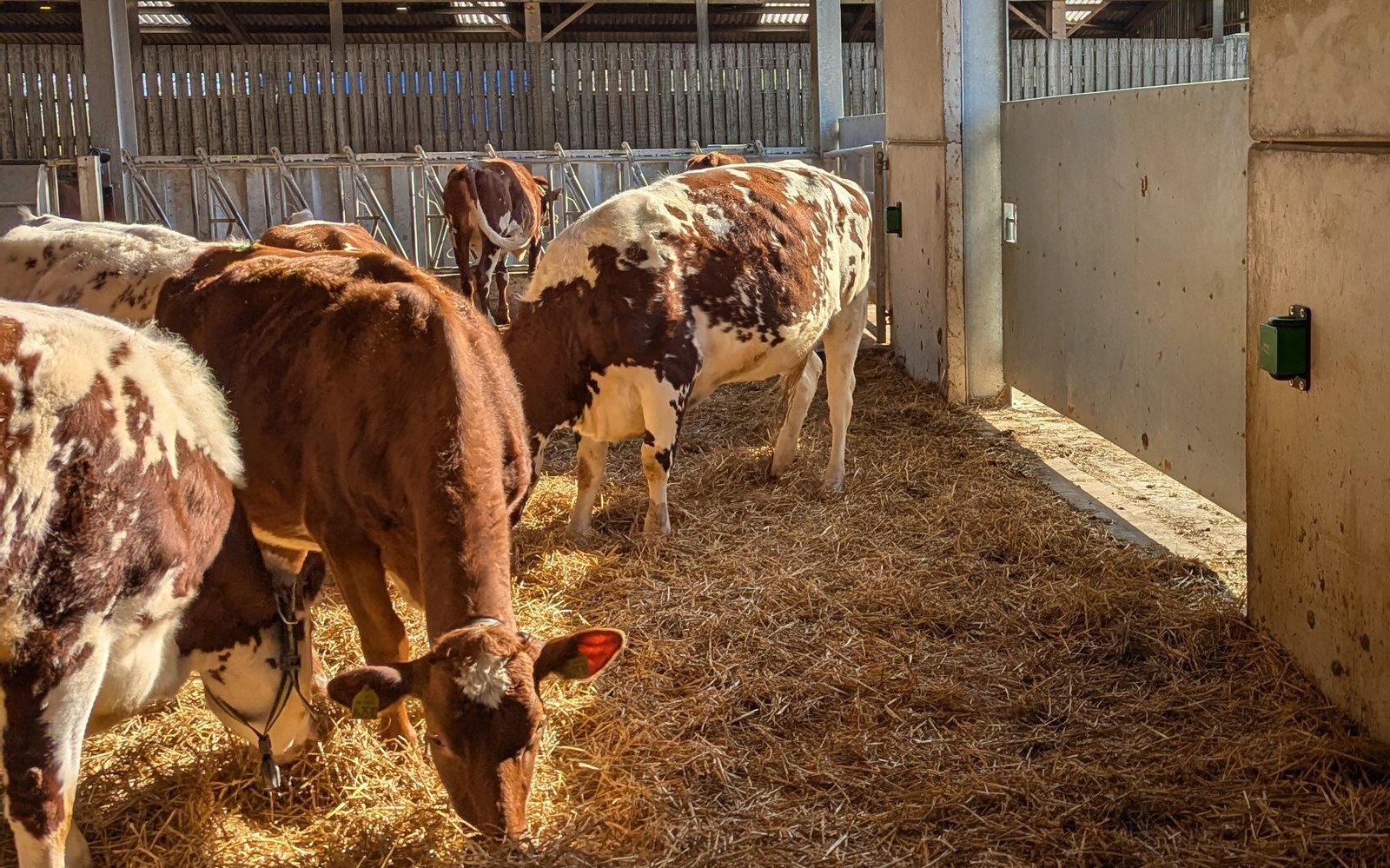
Put Pneumonitor where the cows actually stand and lie, not only by the door. Start with known hot spots: poorly ventilated corners, crowded areas, or collecting yards that trap heat.
-
Watch temperature and humidity together
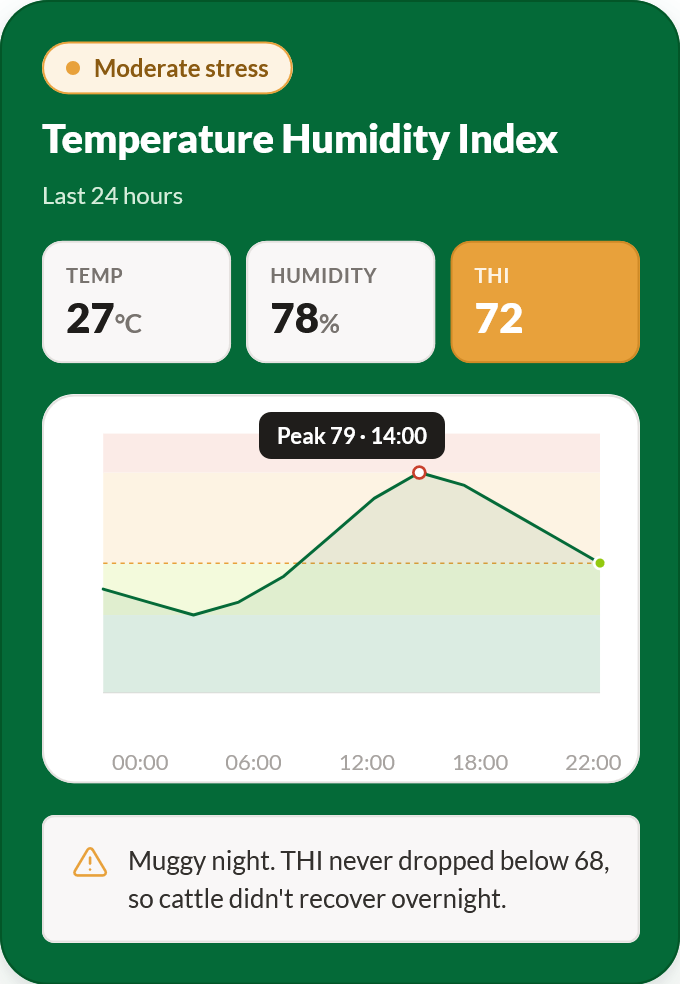
Heat stress is not just a hot afternoon. Muggy air and warm nights stop cattle recovering. The dashboard shows the conditions in the building, not only the forecast outside.
-
Get notified when the shed turns risky
Turn on notifications when housing conditions drift into stress. Act on ventilation, stocking, water and handling before the tank or the vet visit tells you after the fact.
-
Prove what changed
Use the history to see whether opening sides, adding fans, or changing routines improved the microclimate. Spend effort on fixes you can evidence.
Common questions about adult cattle monitoring
Same device and dashboard idea: measure the air animals actually live in. The use case is different. In calf pens the focus is pneumonia risk. In adult cattle housing the focus is heat stress and shed conditions.
In the housing where the herd actually stands and lies, not only by the door or in the yard. Put units where microclimates differ: crowded areas, poorly ventilated corners, collecting yards if those are a known heat trap.
Temperature and humidity together matter more than the thermometer alone. The dashboard helps you see when housing conditions drift into stress, including warm muggy spells and poor overnight recovery.
No. Pneumonitor is standalone: mobile data and battery power.
The app is optional. You can view all your data in the online dashboard. The app is only needed if you want notifications.
Want to make the data even more useful?
Monitoring shows when the shed turns risky. Enhanced Analytics helps you compare locations, dig into alarm patterns, bring in other farm data, and generate deeper reports - an optional subscription you activate inside the dashboard when you want clearer answers.
Explore Enhanced AnalyticsWant Pneumonitor in your dairy or beef housing?
Tell us about your sheds and we will help you plan where to monitor first.