Stop treating pneumonia that started in the air
Read the pen at calf height, get notified when conditions turn risky, and put your effort into fixes that match what the shed is actually doing. This pathway is about calf pneumonia risk, not adult cattle heat stress.
From box to useful data in four steps
-
Install in the pen
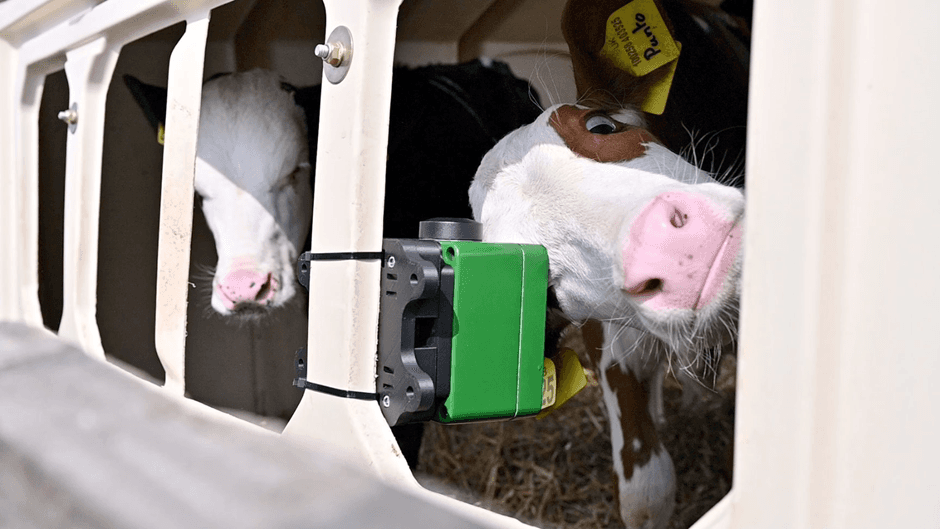
Mount Pneumonitor at calf height using the fixing guide. Start with pens that already have disease pressure, or any corner of the shed you know is a problem.
-
Capture the microclimate
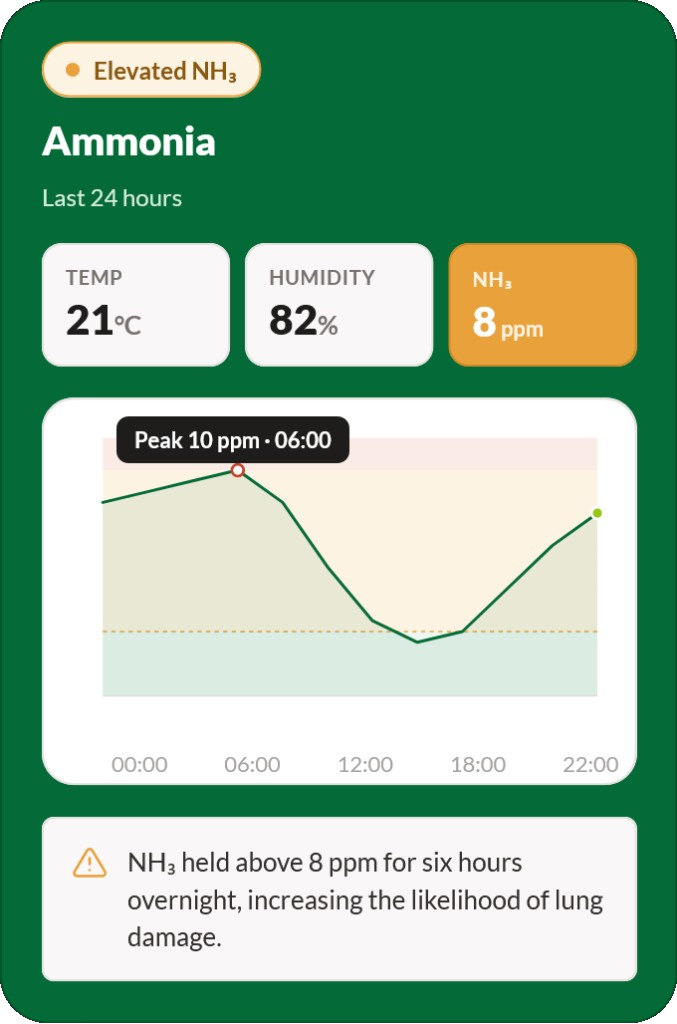
It tracks temperature, humidity and ammonia in the pen and streams those readings to your dashboard.
-
Get notified early
Turn on notifications and Pneumonitor will alert you when conditions look likely to raise pneumonia risk, through calf stress or a poorer pathogen environment.
-
Fix what the data shows
Use the history to see which pens drift into risk and whether your changes worked. Spend effort on the problems you can evidence, not the ones you only suspect.
Common questions from farmers
It depends on the shed. We suggest one for each microclimate. E.g. one near an open side, one in the middle of the shed, one by a far wall.
Yes. Pneumonitors are simple to remove and re-install. Link them to a new farm in the dashboard and new readings and alerts follow that farm, while old data stays available.
Yes. Alerts are opt-in and configurable by farm and person. You can get alerts for one farm and not another.
No. Pneumonitor is standalone: mobile data and battery power.
There is often just enough signal to transmit data even when your phone says there's none at all.
The app is optional. You can view all your data in the online dashboard. The app is only needed if you want notifications.
Want to make the data even more useful?
Live readings and alerts get you acting early. Enhanced Analytics adds weigh-data correlation, pen comparisons, alarm patterns, map views and deeper reports - an optional subscription you activate inside the dashboard when you want to go further.
Explore Enhanced AnalyticsWant Pneumonitor on your farm?
Tell us about your sheds and calf setup. We will help you work out how many units you need and where to put them.